
As the duration of the FRBM Act, enacted in 2003, has come to an end, the government would be required to replace it with another law on fiscal consolidation.


The IMF has encouraged both the UK and the EU to work collaboratively towards a smooth transition.
India's foreign exchange reserves declined $1.73 billion to $254.21 billion during the week ended May 15, 2009, mainly due to revaluation of currencies.
The Congress-led coalition government will have to address the challenges of improving the country's infrastructure and modernise agriculture to ensure high growth of the economy
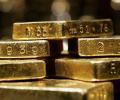
Gold, a safe-haven bet, is likely to continue its record-smashing journey in the New Year, rising to Rs 85,000 per 10 grams and even Rs 90,000 level in domestic markets if geopolitical tensions and global economic uncertainties continue.
Warning that the worst may not be over yet, Reserve Bank Governor D Subbarao has said the global economic recession may not only continue through 2009 but could prolong to the next year as well.
If India takes part in $500-billion resource raising programme of International Monetary Fund, as decided at the G-20 summit in London last week, it will cost the country up to $11 billion (Rs 55,000 crore).
Prime Minister Manmohan Singh told the global community that India is willing to increase its contribution to the International Monetary Fund but does not intend to borrow any money from the multilateral lending agency.
Prime Minister Manmohan Singh on Thursday partly blamed International Monetary Fund for the current global economic crisis.
The International Monetary Fund and World Bank heads want their shareholders' consensus before working to rebuild Iraq, but some countries worry the United States is trying to use the multilateral lenders to cut out the United Nations.

The recent bailout of Romania by the International Monetary Fund puts the spotlight back on the East European block of countries and what it means for the Western European banking sector. If evidence is anything to go by, things are turning for the worse. In fact, if a block of countries could be termed 'sub-prime', Eastern Europe seems to qualify as the countries seem to have been battered and bruised big time by the ongoing global financial turmoil.
"Overall we are beginning to see some hopeful signs. . . in a number of sectors we have seen some changes... cement, steel, capital goods... I don't think 5.1 per cent is what we are going to achieve," Cabinet Secretary K M Chandrasekhar said here at the CII Annual session in New Delhi.
The International Monetary Fund has said the global economy in 2009 is likely to contract for the first time since the Second World War.
International Monetary Fund (IMF) expects India's inflation to hover around 2 per cent during 2009-10, mainly on account of declining commodity prices and weakening demand resulting from economic slowdown.

For the 2009-10 fiscal, Pranab said, he expects the economy to grow by 7.2 per cent.

Gauba is said to be the key architect of the Jammu and Kashmir Reorganisation Act under which Jammu and Kashmir was divided into two Union territories following the abrogation of the special status given to the erstwhile state under Article 370 of the Constitution.
Gold reserves were down by $1.441 billion in the reporting week to $35.999 billion.
India's foreign exchange reserve went up by $3.59 billion to $254.05 billion during the week ended December 19, 2008 mainly on account of revaluation in foreign currency. The foreign currency assets rose by $3.58 billion to $ 245.30 billion, according to the latest data released by the Reserve Bank of India on Friday.
The International Monetary Fund (IMF) chief Dominique Strauss-Kahn has said the level of debt in the UK is "disturbing" but more government borrowing is necessary to stimulate growth.

The appointment of Rajan, a former chief economist of the International Monetary Fund and now a professor of finance at University of Chicago, comes at a time when India, like most of the world economies, is grappling with the impact of the global credit crisis.
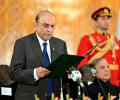
Pakistan's newly-elected President Asif Ali Zardari on Tuesday announced that he would not draw any salary during his tenure as part of his bid to help the cash-strapped country face the challenging economic hardship.
Reveleus, a business of I-flex solutions, said on Monday the International Monetary Fund has selected its business intelligence and data warehouse technology offering for the design and implementation of a data warehouse.

For the week under review, foreign currency assets, which are the biggest parts of the reserves, increased by $1.642 billion to $410.453 billion.

Gold prices on Thursday crossed the crucial Rs 17,000 per 10 gram level in the bullion market here, buttressed by frantic buying by jewellers for the ongoing marriage season amid a firming global trend.

The best way to invest in gold is in a staggered manner, to take benefit of any sharp corrections that could come in it.

Gold gained Rs 50 and touched a new peak of Rs 16,850 per 10 gram.

The IMF, in pursuance of the decisions taken at the G-20 summit in London, had decided to sell about 403.3 tonnes of gold to shore up its finances so that it can lend money to the poor countries at concessional rates.
Many analysts were surprised at the speed with which India bought the IMF gold. However, they believe that it is a very smart move as by buying IMF gold, New Delhi is shoring up its bullion reserves and slowly trying to hedge its bets on the US dollar which has been losing value against other currencies.
Indian economy has a stable system to cope with frequent changes in the political arena to pursue the growth agenda, International Monetary Fund executive director Y V Reddy said.

Asian economies have been very strong in their stimulus from both monetary and fiscal sources.
The government on Tuesday said the IMF had expressed concern about sustainability of India's fiscal situation and debt position.
India's foreign exchange reserves grew marginally by $51 million during the week ending January 21, 2005 to touch $129.43 billion.
